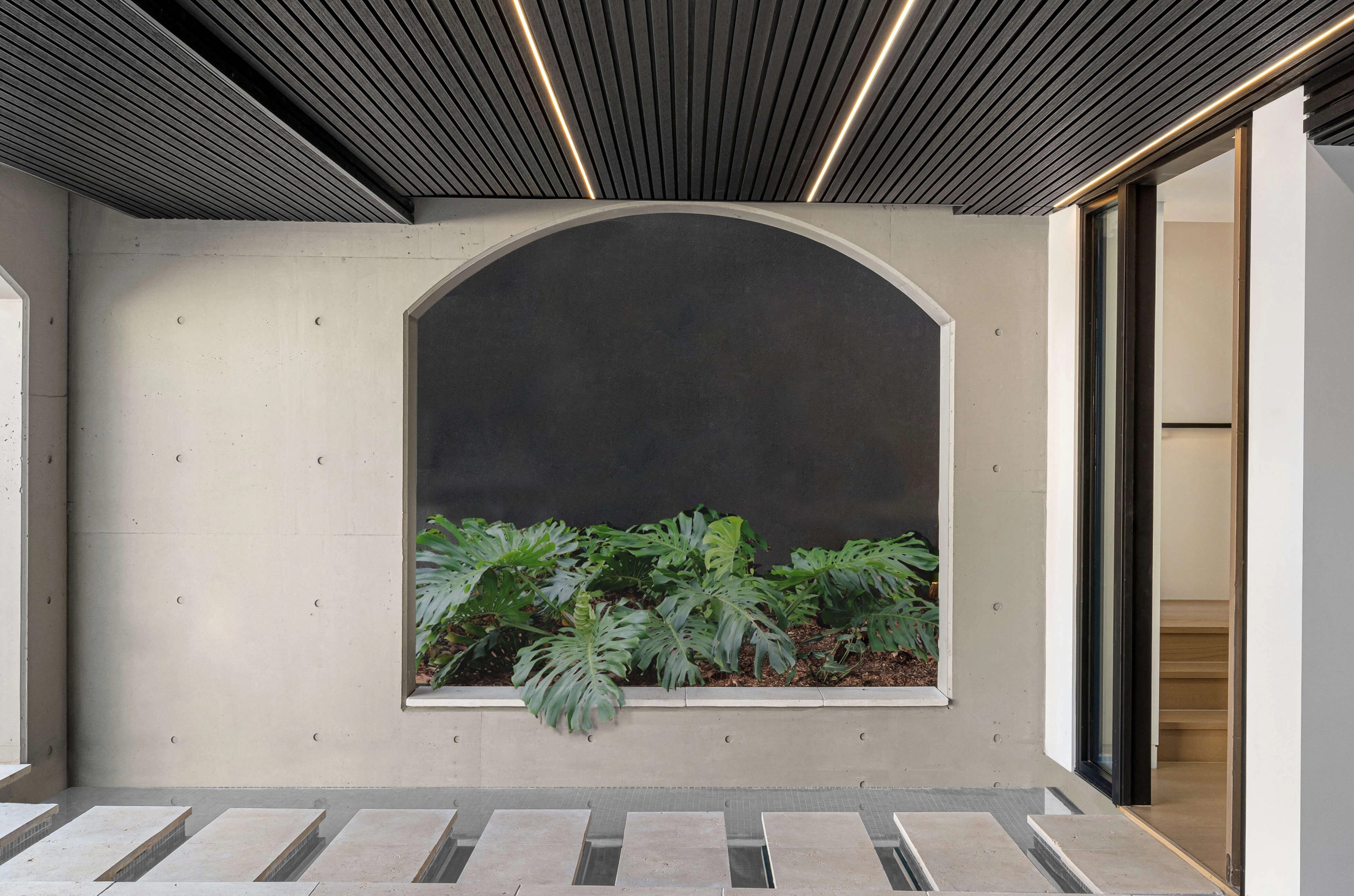
A concrete house can be cast on site inside formwork or made from precast panels poured in a mould and lifted into place. That choice shapes the look, the program and the price. Our focus here is the architectural concrete home, cast in place or precast, where the concrete itself is the finish. Off-form concrete is the face left when the formwork (the mould that holds wet concrete until it sets) comes away and that face becomes the surface you live with.
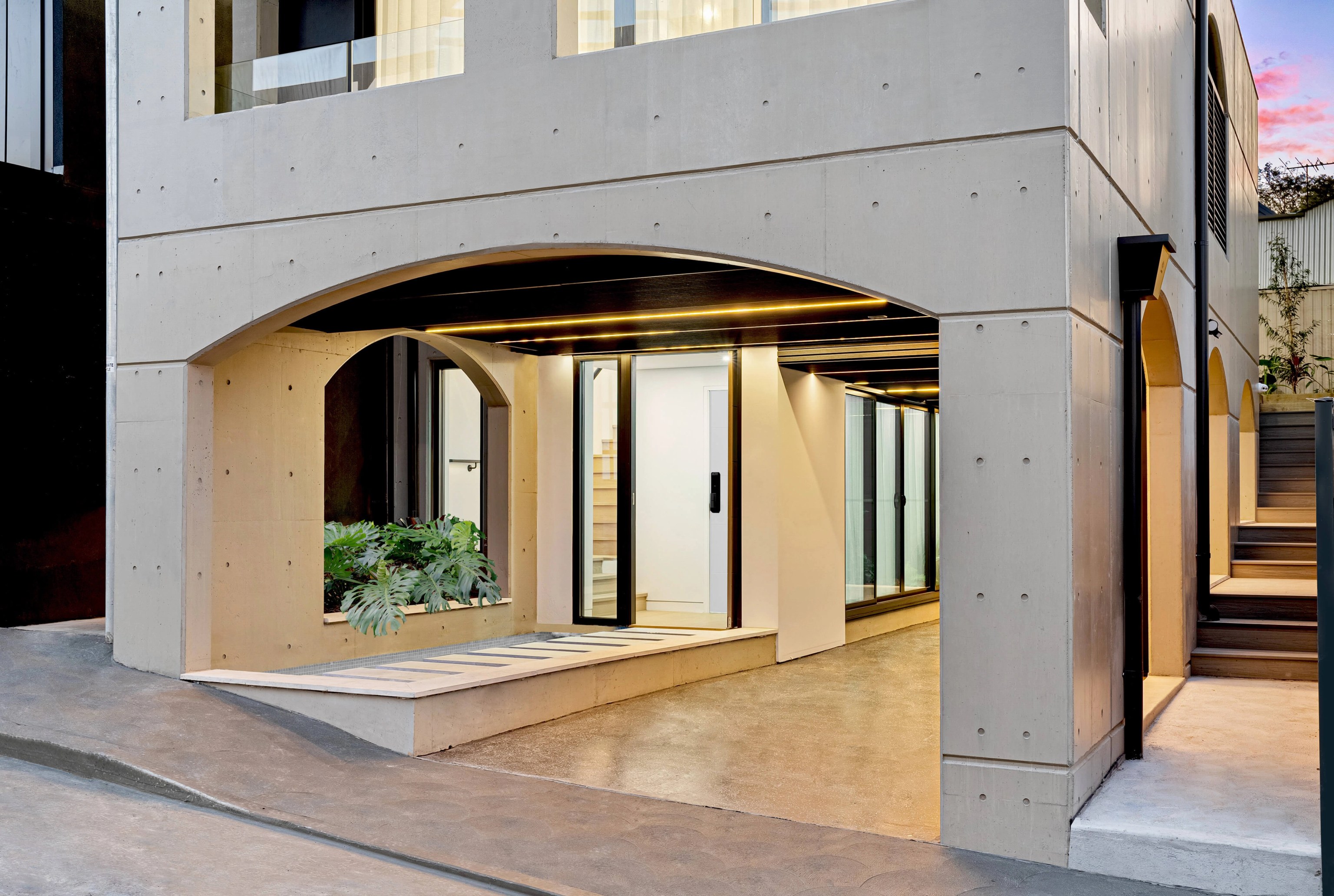
As architectural builders in Sydney we build architect-designed homes as well as our own. Among our custom homes in Sydney is CLAY in Rozelle, a three-storey off-form concrete house which Oikos designed and we built.
Is concrete good for a house?
Yes, when the design puts its thermal mass to work and you want the concrete itself as the finish. It suits less well when the house faces the wrong way or relies on the walls alone to stay comfortable. YourHome's thermal mass guidance explains that concrete absorbs and stores heat then releases it slowly and says thermal mass needs to be combined with orientation, insulation and appropriate glazing to be effective. Thermal mass is not insulation, so a concrete home needs its insulation designed alongside the mass.
What are the disadvantages of a concrete house?
Two drawbacks need planning: the details set into the concrete and the moisture that can form inside the home.
- Details set into the structure: for a precast home YourHome says the whole design and construction procedure, including the detailed set-out of services, has to be worked out before the first pour.
- Condensation: YourHome's condensation guidance explains that condensation occurs when humid air meets a cooler surface, which cool concrete walls can provide.
Cast on site or precast?
Precast is a method of construction rather than a type of finish, so a precast wall and a cast in place wall can both have an off-form face. Which suits your home depends on the site and its access, how repetitive the walls are and the surface you want to see.
How much does it cost to build a concrete house in Australia?
YourHome's precast concrete guidance says costs for individual homes can sit at the upper end of heavy, high-mass ways to build, although repetition and reduced site work can offset some of that cost. For a sense of scale, CPP Quantity Surveyors' 2026 Sydney guide gives $4,500 to $10,000 per square metre and above for an architecturally designed home with premium finishes, which our guide to the cost of building a custom home in Sydney also uses. That is a construction cost for the whole house rather than a rate for concrete, so price the concrete on your own drawings, where the formwork, the finish, the engineering and site access all show.
How is an off-form finish specified?
The Cement Concrete & Aggregates Australia (CCAA) guide to off-form finishes explains that off-form finishes can be either smooth or textured. The formwork face you choose decides which one your walls get.
The current Australian Standard for formwork, AS 3610.1:2018, covers how the quality, tolerance and colour of off-form surfaces are specified, so ask for a finish class (the standard's grade for how an off-form surface must look) for every exposed wall and have it written into the specification.
Then see that finish before the main pour, since the CCAA guide describes the acceptance of an agreed test panel, a sample of the finish that then sets the standard for the work that follows.
How do you care for off-form concrete?
The CCAA guide calls off-form a low-maintenance finish, not a maintenance-free one. It warns that the diluted acid used on stubborn salt deposits can change the colour of the concrete and etch its face, so treat a trial area first to see the effect on the finish.
Talk about your concrete home
Share your drawings or your brief so we can talk through the finish, the structure and the budget before anything is poured.
Questions
Is precast the same as tilt-up?
Not quite. YourHome distinguishes panels precast off site from tilt-up panels, which are cast on site and then stood up into position.
Does off-form concrete need a sealer?
Sometimes. The CCAA guide ties the type of sealer to the job it has to do, such as resisting graffiti, limiting stains and easing cleaning, stopping grime building up or acting as a waterproofing membrane. It adds that the manufacturer's recommendations on the product and its application should be followed.