What is a waterproofing certificate and when is it needed for a renovation?
A waterproofing certificate is usually the waterproofer's written statement that your wet areas were sealed to the required standard. It sits beside two separate things. A licence shows who may do the work, while the installer's certificate records what they did. Where the renovation has a certifier, a critical stage inspection also checks the membrane before tiles cover it.

Last reviewed
Licence, certificate and inspection
The NSW Government treats waterproofing as trade work, defined as protective treatment that stops water getting into a home or escaping from wet areas such as a shower. A contractor licence is needed for residential waterproofing valued at more than $5,000 in labour and materials. Getting that licence requires a recognised waterproofing qualification. The licence tells you the person is entitled to do the work but says nothing about a particular bathroom.
The installer's certificate is usually what people mean by a waterproofing certificate. It is a useful record, yet NSW guidance for certifiers draws a clear line around it. The Government's answers to certifiers' questions say only certifiers can issue a compliance certificate under the planning law. Certificates from builders or installers are not the same and cannot be relied on in the same way.
What the building code asks of a wet area
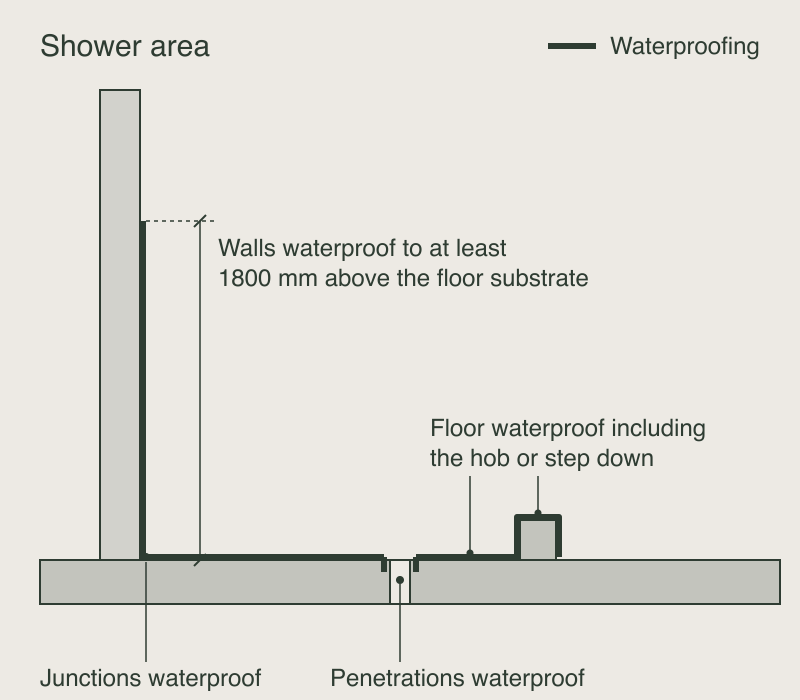
The National Construction Code requires building elements in a wet area to be protected by a waterproofing system. For houses, Part 10.2 of the ABCB Housing Provisions sets out where. The floor of a shower area must be waterproof, including any hob or step down. The shower walls must be waterproof to at least 1800 mm above the floor substrate. Junctions and penetrations in the shower area must be waterproof too. The Provisions reference the 2021 edition of AS 3740, the Australian Standard for waterproofing domestic wet areas.
When an inspection applies to your renovation
It depends on the approval. Where a renovation has a construction certificate or a complying development certificate, a principal certifier is appointed and carries out critical stage inspections. NSW Planning's post-consent guide lists waterproofing among them. It warns that a missed inspection can delay or prevent the occupation certificate and says the builder must tell the certifier about any inspection that was missed. The City of Parramatta's inspection guide names wet area waterproofing in bathrooms and laundries in its list.
Some bathroom work needs no approval at all. NSW Planning's asbestos fact sheet notes that demolishing and replacing kitchens and bathrooms can be exempt development when the standards are met. In that case there is no certifier and no critical stage inspection. The work still has to meet the building code, so the waterproofer's licence and the record of what was installed matter more. Our guide to what you can build without council approval explains where exempt work ends.
Why the record matters after handover
The NSW Home Building Act treats waterproofing as a major element of a home, so a major defect in it carries a six year statutory warranty. Our guide to what counts as a major defect explains how that works. Keep the installer's certificate, the product details and any photos of the membrane with your handover documents. If you want another set of eyes before the tiles go on, our guide to hiring an independent building inspector explains how stage checks work.
How we approach waterproofing at SHORE
Before owners compare renovation prices, we suggest asking for a services plan and a waterproofing scope. A new layout often moves bathrooms away from the pipes that served the old one. On site, fixtures are installed, commissioned and tested room by room before we call a space complete. A guided handover then walks you through the house, its systems and its warranties. To see how we plan a renovation from the existing house to the first year in it, explore our luxury home renovations in Sydney.
Your next step
Explore renovations